The research in which the ICM-CSIC has participated, provides new evidence on the ability of these crustaceans to react to harmful stimuli, with direct implications for aquaculture and the fishing industry, animal welfare legislation and scientific practice.
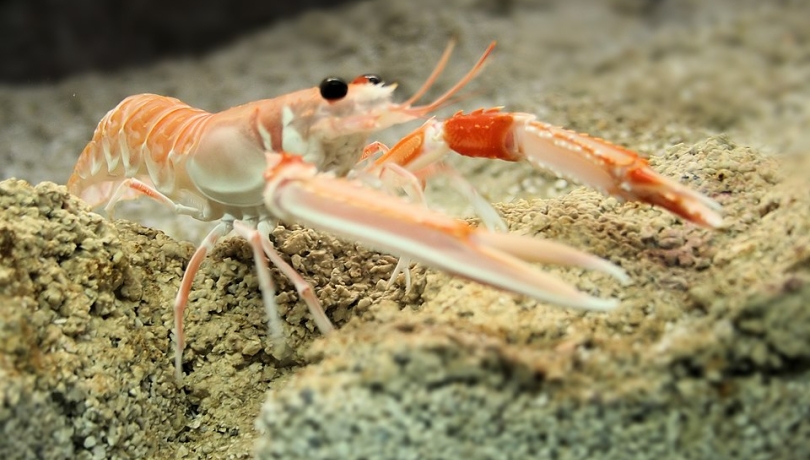
A new international study led by the University of Gothenburg (Sweden), in collaboration with the Institute of Marine Sciences (ICM-CSIC), has shown that analgesics commonly used in humans, such as aspirin and lidocaine, reduce or eliminate stress responses in Norway lobsters (Nephrops norvegicus). The finding, recently published in the prestigious journal Scientific Reports, provides new evidence of these crustaceans’ ability to respond to noxious stimuli, with direct implications for aquaculture and the fishing industry, animal welfare legislation and scientific practice.
Specifically, the research results show that prior administration of analgesics significantly reduces the escape reactions of Norway lobsters to potentially painful stimuli such as electric shocks. This behaviour reinforces the idea that the physiological mechanisms involved in the perception of noxious stimuli may be more similar between crustaceans and vertebrates than previously thought, which requires reconsideration of how these animals are handled and killed.
“This study shows that crustaceans respond to noxious stimuli in a way that is modulated by analgesics, which has clear implications both for their welfare and for practices in aquaculture, fisheries and research,” explains Guiomar Rotllant (ICM-CSIC), co-author of the work and specialist in crustacean physiology.
The research is framed within a context of growing international debate. On the one hand, countries such as Norway, New Zealand and Austria have already banned boiling crustaceans alive on ethical grounds, and in the United Kingdom decapod crustaceans are already recognised as sentient beings. At the same time, the aquaculture sector is exploring alternatives such as electrical stunning, the application of which requires a deeper understanding of how these animals perceive and respond to potential pain.
Responses to noxious stimuli and the effect of analgesics
During the experiments, Norway lobsters exposed to electric shocks showed a typical escape response through rapid tail movements. However, when the Norway lobsters were previously treated with analgesics, aspirin or lidocaine, this reaction decreased markedly or disappeared.
“Although we already knew that decapod crustaceans show signs of discomfort and stress in response to injury, the latest experiments show that Norway lobsters react adversely to electric shocks that are painful to humans,” notes Lynne Sneddon (University of Gothenburg), author of the study and professor of zoophysiology.
To carry out the study, two compounds were assessed: aspirin, administered by injection, and lidocaine, dissolved in water. Both drugs reduced reactions to the noxious stimulus, although with different responses. In the case of aspirin, it caused the Norway lobsters to begin cleaning their legs and claws, which is defined as a sign of stress, while at the same time the constant tail movement decreased upon receiving the electric shock. On the other hand, treatment with lidocaine also reduced the constant tail movement of the Norway lobsters, but without showing other adverse effects.
Implications for animal welfare and science
“The fact that analgesics developed for humans also have an effect on Norway lobsters indicates the extent to which we share basic physiological mechanisms with these animals, which reinforces the need to consider their welfare in the different contexts in which we interact with them,” adds Sneddon.
Overall, the study, which has been supported by the Organisation for Economic Co-operation and Development (OECD), highlights the need to develop more humane methods of killing in the food industry, as well as to advance their possible inclusion in animal welfare regulations in scientific research. It also opens the door to improving experimental practices through the use of analgesics to reduce stress and suffering in crustaceans.