This is the main conclusion of new research led by the Institut de Ciències del Mar (ICM-CSIC) and the French laboratory LOCEAN-IPSL in collaboration with the Ecopath International Initiative.
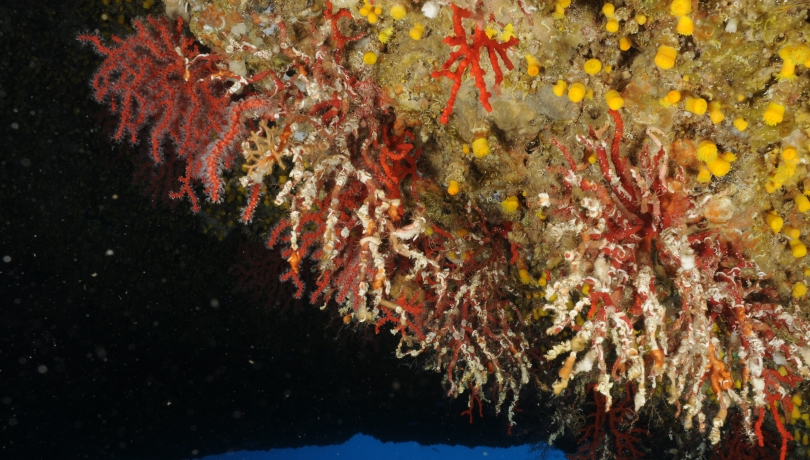
A new study led by the Institut de Ciències del Mar (ICM-CSIC) and the LOCEAN-IPSL laboratory, part of Sorbonne University (France), has shown that marine heatwaves are profoundly altering ecosystems in the western Mediterranean. The research, published in Scientific Reports, analyses for the first time how extreme climate events affect the marine ecosystem as a whole and the fishing activities that depend on it.
“This study shows that extreme events are no longer an exception, but a structural component of climate change in the Mediterranean Sea. Their effects have direct and indirect consequences for ecology,” explains Andrea Kaplan, one of the lead authors of the study and a researcher at ICM-CSIC.
Heatwaves are becoming more frequent and intense
Marine heatwaves are prolonged episodes of abnormally high ocean temperatures. In recent decades, they have increased in frequency, duration, and intensity due to climate change. In this regard, the study reveals a worrying finding: in recent years, heatwaves have been reaching greater depths and covering wider areas.
According to the study, heatwaves occurring over the last decade have affected more than 60% of the area of the western Mediterranean, profoundly impacting the ecology of the basin by altering key biological processes and causing changes in species distribution and even in some trophic relationships. According to the research team, these episodes do not act in isolation but accelerate deterioration trends already detected in the Mediterranean, linked to overfishing, pollution, and the increasing use of marine space, among other factors.
Camila Artana, the other lead author of the study, highlights that the distribution and characteristics of these phenomena vary depending on the area:
“Our results show that the Mediterranean’s response is not uniform. While in the north of the study area we detect the greatest increases in temperature relative to usual conditions, it is in the south, in areas such as the Alboran Sea and the Algerian Sea, where heatwaves reach the highest absolute temperatures. This generates critical thermal stress for many species, which more severely affects existing fisheries and transforms the marine environment.”
Differentiated impacts across the food web
“Heatwaves reconfigure entire ecosystems through direct effects caused by thermal stress or indirect effects through changes in interactions between species,” explains Francisco Ramírez (ICM-CSIC), co-author of the study.
The study sheds light on how the structure of the ecosystem responds at different speeds: species at lower trophic levels — usually smaller and with faster growth, such as phytoplankton and zooplankton — show rapid alterations. By contrast, species at higher trophic levels — those that are larger and grow more slowly, such as fish and birds — respond more slowly, and the effects of heatwaves often become visible only after years or even decades.
In this regard, Artana adds:
“The fact that species at higher trophic levels react over longer time scales suggests that the impact of these heatwaves may accumulate and be observed months or years after the event in question. We are therefore not facing a temporary problem, but rather constant pressure that weakens the resilience of the system year after year.
Towards adaptive management
The study also highlights the potential repercussions of these episodes for several species of high commercial interest, including hake and sardine, among others, whose populations may be experiencing a sharper decline than expected due to heatwaves. According to Marta Coll (ICM-CSIC), another co-author, this “demonstrates the need to implement more proactive management measures to prevent the most vulnerable species from being the most affected, which would allow us to secure catches and, consequently, protect the fishing economy”.
Overall, the research highlights the need to incorporate this new reality into fisheries and environmental management and planning to anticipate risks and reduce vulnerabilities.
“For example, measures such as protecting key marine areas, avoiding overfishing and reducing pollution can be strengthened to increase the resilience of ecosystems and the human activities that depend on them,” concludes Coll.